

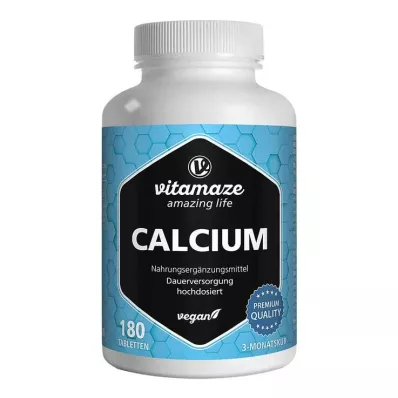
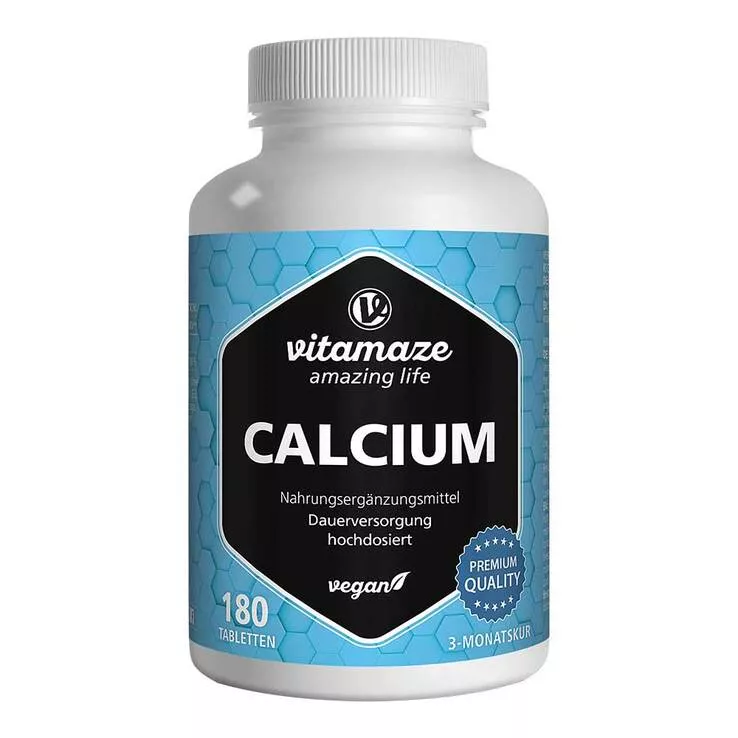
Calcium 400 mg vegan tablets, 180 pcs
CALCIUM 400 mg vegan Tabletten
Manufacturers: Vitamaze GmbH
PZN: 14347730
Dosage: Tabletten
Content: 180 St
Reward Points: 174
Availability: In stock
$20.73
from German pharmacies to your address
Images of Calcium 400 mg vegan tablets, 180 pcs




Medicines Reviews
Monika
24/3/2022
The calcium preparation from Vitamaze has normalised my calcium level in a short time. I continue to take it daily (2 tablets) and can only recommend it. I am pleased that it does not contain a lot of additives, which is unfortunately the case with most calcium tablets.
Michael Hacke
9/3/2021
The tablets are doing me good and my bones feel better. At least that's my first impression. Will keep testing. Tablets are very easy to take.
S. Fechner (Gast)
31/12/2020
Good price-performance ratio. I was looking for a good calcium preparation without the addition of other vitamins etc. and have now finally found it. The tablets are pleasant to swallow. All in all, the product makes a high-quality impression.
Markus
18/12/2020
I take one tablet every day. It is very pleasant to swallow and has no unpleasant taste. It works exactly as it should. I will buy the product again.
Andreas
10/12/2020
Very good tablets, good consistency and easy to swallow. I am delighted so far.
Anja Fuhge
21/6/2020
Great price, very good quality. I mix it 2:1 with magnesium
Susan Pohle
13/10/2019
My doctor has advised me to take additional calcium. This is a high dose and I have already had good experiences with Vitamaze. I tolerate it very well and have no side effects. The price is okay for 3 months. I will now take a calcium cure more often as I realise that it is good for me. I can only recommend it.
Said Wahezi
2/10/2019
Calcium For example, iron deficiency can cause anaemia, or insufficient calcium intake can be a risk factor for osteoporosis. The functions of minerals and trace elements are just as varied as the diseases that can occur as a result of a deficiency of these vital substances. This is particularly true for zinc. Taurine has important membrane protection and detoxification functions. On the cell membranes, taurine controls the transport of magnesium, calcium, potassium and sodium. In the nervous system, taurine supports neurotransmitter functions. A taurine deficiency leads to an increase in inflammatory processes Vitamin D (cholecalciferol) is the manager of calcium absorption. It ensures the healthy functioning of muscles, bones, nerves and the immune system. Vitamin C (ascorbic acid), probably the best known vitamin, is essential for connective tissue weakness and to strengthen the immune system. Vitamin D (cholecalciferol) is essential for absorbing calcium for your bone density. During adolescence, more bone tissue is built up than is broken down, which is why bones grow and become stronger and stronger. This process continues until the age of 25 or even 35. At this age, bone mass has reached its peak. In order to maximise bone mass, it is important to eat a calcium-rich diet and get plenty of exercise during this time. Osteoporosis can also occur because not enough bone mass was formed during adolescence to compensate to some extent for the later loss of bone mass. Oestrogen controls the absorption of calcium and other minerals into the bones and therefore plays a decisive role in bone metabolism. 70 % of patients over 80 years of age have bone density values that are lower than normal. The destruction of bones is also favoured by stimulants such as coffee and alcohol. Smoking also disturbs the calcium balance in the body. It follows from the above that the bone loss caused by calcium deficiency is an expression of a wider nutritional problem. The more conscious we are of our diet, the more we favour fruit and vegetables and wholemeal products, eat meat in moderation at most and avoid fast food and sugar altogether, the better it is for our overall health. And the more fully the body is provided with all the nutrients it needs, the better it can set its self-healing powers in motion. Silicon for bones and blood vessels The effect of silica in the body is by no means limited to the outer shell. Silica strengthens the bones because it facilitates the deposition of bone-preserving substances such as calcium, magnesium and phosphorus. Without this trace element, our bones and joints would become softer, which would lead to a weakening of the scaffolding that gives the entire body its structure and strength. Silicic acid also plays an important role in the stability and elasticity of blood vessels.