

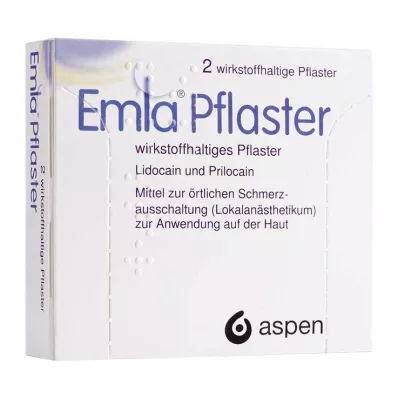


Emla plaster, 2X1 pcs
EMLA Pflaster
Manufacturers: Aspen Germany GmbH
PZN: 08864800
Dosage: Pflaster
Content: 2X1 St
Reward Points: 78
Availability: In stock
$14.40
$11.11
from German pharmacies to your address
Instructions for use for Emla plaster, 2X1 pcs
Emla® plasters
Emla® plaster is an anesthetic plaster that is used to locally anesthetize the skin.It helps to reduce the sensation of pain during needle punctures and minor surgical procedures, which contributes to a painless treatment.The patch is particularly useful for vaccinations, injections, blood draws and the placement of venous cannulas.It is ideal for adults, teenagers and children and can also be used on small children.
Emla® plaster contains the active ingredients lidocaine and prilocaine, which block the conduction of pain stimuli.The effect begins after about an hour and lasts at least two hours.The patch is easy to use and is stuck directly onto the area of skin to be anesthetized.It is dermatologically tested and meets the highest quality standards.
No prescription is required for this product.It is available in pharmacies without a prescription.
Area of application
Emla® patch is used to locally anesthetize the skin.It is particularly suitable for anesthesia before needle insertions, such as during blood tests or vaccinations.The patch is dermatologically tested and allows for simple and uncomplicated application.It reduces the sensation of pain at the treated skin area, which contributes to a painless treatment.
Active ingredients / ingredients / ingredients
Emla® patch contains the following active ingredients and excipients: 25 mg lidocaine, 25 mg prilocaine, carbomer 974P, cellulose, sodium hydroxide, PEG-54 castor oil, hydrogenated, poly(acrylamide-co-isooctyl acrylate), polyethylene, polyethylene film, siliconized, and purified water.
Contraindications
Emla® patches must not be used if you are hypersensitive to the active ingredients lidocaine and prilocaine or any of the other ingredients.The patch should also not be used if you are hypersensitive to other painkillers (local anesthetics of the amide type).
Dosage
For adults and adolescents over 12 years of age, the recommended dosage is to apply one or more patches to the areas of skin to be treated and leave to act for one hour.Sticking on the patches is simple and uncomplicated.The reaction time of the plaster is 1-2 hours after it has been stuck to the area of skin to be treated.The plaster must not be cut or otherwise divided.Follow the instructions in the package insert.
Intake
Emla® patch is used for skin application.The skin areas to be treated must be cleansed and dry before using the patch.If necessary, shave the area of skin to be treated beforehand.The plaster is stuck onto the skin and only pressed firmly on the outer edge so that no emulsion can escape to the side under the plaster.It is advisable to write down the time the patch was applied on the edge.
Patient information
Take special care when using the medicine if you suffer from a congenital or acquired blood formation disorder (methemoglobinemia) or a deficiency of a certain enzyme (glucose-6-phosphate dehydrogenase).In these cases, there is an increased risk that the concentration of methemoglobin in your blood will become too high.The preparation should therefore not be used in these cases.
Methemoglobinemia is a disease in which some of the blood pigment hemoglobin has converted into methemoglobin.When there is too much methemoglobin, the blood can no longer properly supply the body with oxygen.The signs of this are a bluish-gray discoloration of the skin around the lips and fingers, restlessness, nausea, dizziness and headache.
The medicine should not be used on open wounds.You should not use the preparation before a vaccination with live vaccines in the skin (e.g. tuberculosis vaccination), as it is not certain whether the vaccination will then work.Although clinical studies indicate that the effect of this form of vaccination is not influenced by the use of the preparation, the effectiveness of such a vaccination should be checked.If you would like to use the product before a vaccination, please ask your doctor.
If you suffer from a certain form of skin inflammation (atopic dermatitis), leaving the patch on for a shorter period of 15 to 30 minutes may be sufficient.An exposure time of more than 30 minutes could lead to an increased occurrence of local vascular reactions in these patients, in particular redness at the administration site and, in some cases, individual local, punctate skin changes (petechiae) and inflammatory skin bleeding (purpura).
The preparation should only be used with particular caution in the area around the eye as it irritates the eyes.In addition, injuries to the cornea can occur if the eyelid is anesthetized and the eyelid reflex is therefore missing.If the medicine accidentally comes into contact with the eye, rinse the eye immediately with plenty of lukewarm water.Protect your eyes until you can feel or see again.
The medicine should not be used in premature babies born before 37 weeks of pregnancy, in newborns and infants up to 3 months of age, and in infants up to 12 months of age if the product is used together with medicines that promote the formation of methemoglobin (e.g. sulfonamides).
In newborns and infants younger than 3 months, an increase in the concentration of methemoglobin in the blood was observed up to 12 hours after use of the preparation.This increase was temporary and did not have a significant impact on health status.
Before removing molluscum warts in children who suffer from a certain form of skin inflammation (atopic dermatitis), an exposure time of 30 minutes is recommended.Studies have not proven the effectiveness of the drug when taking blood from the heel of newborns.
When used in the recommended doses, the medicine has no influence on the ability to drive and use machines.
Pregnancy
There is currently no sufficient experience with the use of the drug during pregnancy and breastfeeding.However, it is expected that lidocaine and prilocaine have been used in a large number of pregnant women and women of childbearing potential.
Lidocaine and prilocaine, the active ingredients of the preparation, cross the placenta.However, so far no teratogenic effects have been observed when used during pregnancy.Although when used on the skin it can be assumed that only a small amount of the active ingredients enter the bloodstream, one should be careful when using the product during pregnancy.
Lidocaine and most likely prilocaine, the two active ingredients of the drug, pass into breast milk.However, when dosed as indicated, this occurs in such small quantities that the risk of side effects in the breastfed child is considered to be low.Contact of the infant with the treated skin areas should be avoided.
If you are not sure, ask your doctor or pharmacy.
Notes
Do not use the medicine on wounds or mucous membranes.For allergic skin, a shorter exposure time of the patch of around 15-30 minutes may be sufficient.Be careful when using the patch around the eye as the medicine irritates the cornea of the eye.In case of accidental contact with the eye, rinse the eye with plenty of lukewarm water.If the effect lasts for more than 5 hours, the anesthetic effect wears off.
For information about risks and side effects, read the package leaflet and ask your doctor or pharmacy.
Ingredients
Active ingredients: 1 medicated plaster contains 25 mg lidocaine and 25 mg prilocaine.Other ingredients: Macrogol glycerol hydroxystearate (Ph.Eur.), Carbomer 974P, sodium hydroxide for pH adjustment, purified water, cellulose, polyethylene, poly(acrylamide-co-isooctyl acrylate), bleached release film, coated with polyethylene and siliconized.
Application
Please read the instructions for use before use.Emla® plaster is easy and uncomplicated to use.Make sure the area of skin to be anesthetized is clean, dry, and free of makeup or oil.You then stick the plaster on the area of skin to be anesthetized about 1 hour beforehand.The duration of the anesthesia is at least 2 hours.If you use Emla® on your face, the exposure time is 30 - 60 minutes.If you suffer from atopic dermatitis, the exposure time must not be longer than 30 minutes.
The plaster must not be cut or otherwise divided.Follow the instructions in the package insert.
Medicines Reviews
Write a review
Related Products

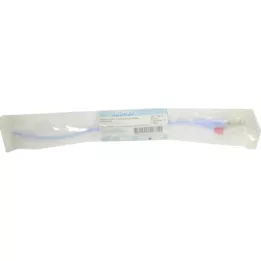
Uromed Soft Silicone Balloon Catheter CH 14 Nela, 1 pc
UROMED Ballonkath.Ch 14 Nelaton Silik.soft 1095
$27.42
Popular in Plaster & Bandages


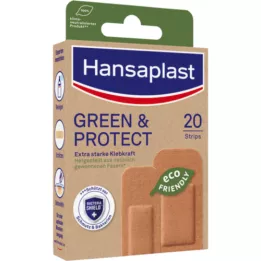
Hansaplast Green & Protect plaster strips (20 pieces)
HANSAPLAST Green & Protect Pflasterstrips
$3.66 $4.58