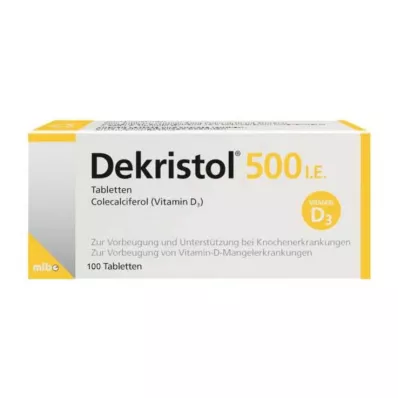
Dekristol 500 IU tablets, 100 pcs
DEKRISTOL 500 I.E. Tabletten
Manufacturers: MIBE GmbH Arzneimittel
PZN: 10068921
Dosage: Tabletten
Content: 100 St
Reward Points: 54
Availability: In stock
$9.15
$6.58
from German pharmacies to your address
Instructions for use for Dekristol 500 IU tablets, 100 pcs
Dekristol® D3 – The sunshine vitamin for every day
Vitamin D is essential for bone health, muscle development, and calcium and phosphate metabolism.It plays an important role in various metabolic processes within the body.The German Nutrition Society (DGE) recommends a daily intake of up to 800 IU of vitamin D. There are two main sources of vitamin D: sunlight and diet.Fatty fish, eggs, milk, and cheese contain vitamin D, whereas fruit and vegetables do not provide significant amounts.The body’s own production of vitamin D is triggered by UV-UV-B radiation from sunlight; however, this is often insufficient, particularly during the autumn and winter months or when sun exposure is limited.
A vitamin D deficiency can lead to low calcium and phosphate levels in the blood and, in the long term, to bone pain, bone deformities, muscle weakness, and impaired immune function.Vitamin D receptors are present in numerous cells throughout the body, indicating involvement in various physiological processes.
Dekristol® D3 tablets are approved for the prevention of rickets and osteomalacia, as well as for the adjunctive treatment of osteoporosis.They are available in various dosages and are suitable for infants, children, adolescents, and adults.The tablets are gelatin-free and therefore also suitable for vegetarians who consume dairy products.
Indication
Dekristol 500 IU tablets contain vitamin D3 (colecalciferol), which is involved in bone formation.The active ingredient, colecalciferol, is identical to the vitamin D3 found in the human body.The product is used for the prevention of rickets; for prevention in cases of identifiable risk of vitamin D deficiency disease in otherwise healthy individuals without absorption disorders; for the supportive treatment of osteoporosis; and for the prevention of rickets in premature infants.
Mechanism of action
Dekristol 500 I.U. contains vitamin D3 (colecalciferol), which regulates the absorption and metabolism of calcium as well as the incorporation of calcium into bone tissue.
Active ingredients / constituents / ingredients
Ingredients of Dekristol 500 I.U. tablets:
Active ingredient: Colecalciferol.One tablet contains 5 mg of colecalciferol dry concentrate (equivalent to 12.5 µg colecalciferol = 500 I.U. vitamin D3).
Other ingredients: Lactose monohydrate 34.47 mg;sucrose 0.87 mg;microcrystalline cellulose;maize starch;modified maize starch;sodium starch glycolate (type A) (Ph.Eur.);highly dispersed silicon dioxide;magnesium stearate;sodium ascorbate;medium-chain triglycerides;all-rac-alpha-tocopherol.
Contraindications
The product should not be used in cases of known hypersensitivity to any of the ingredients listed above.Dekristol 500 I.U. tablets must not be taken in cases of hypersensitivity to colecalciferol or any of the other ingredients of the product, hypercalcaemia and/or hypercalciuria, diagnosed hypervitaminosis D, or the presence of kidney stones.
Dosage
Recommendation for use of Dekristol 500 IU Tablets: Take the tablets with sufficient water.
Use in infants and toddlers: Allow the tablet to disintegrate in water or milk on a teaspoon and administer the dissolved tablet directly into the child's mouth, preferably during a meal.Adding the tablets to a bottle feed or cereal meal for infants is not recommended, as complete intake of the vitamin D cannot be guaranteed in this way.If the tablets are nevertheless to be administered in food, they should only be added after the food has been boiled and subsequently cooled.When using vitamin-fortified food, the amount of vitamin D contained therein must be taken into account.
For the prevention of rickets and osteomalacia in children, adolescents, and adults: 1 tablet of Dekristol 500 IU Tablets daily (equivalent to 0.0125 mg or 500 IU of vitamin D3).
For the supportive treatment of osteoporosis in adults: 2 tablets daily.
For the prevention of rickets in premature infants: The dosage for the prevention of rickets in premature infants is to be determined by the attending physician.
For the prevention of vitamin D deficiency disease in children and adults at identifiable risk: Children, adolescents, and adults take 1–2 tablets of Dekristol 500 IU Tablets daily (equivalent to 0.0125–0.025 mg or 500–1000 IU of vitamin D3).Infants (0–12 months) take one Dekristol 500 I.U. tablet daily (equivalent to 0.0125 mg or 500 I.U. of vitamin D3), dissolved in water or milk.
Intake
For children, adolescents and adults: Take the tablets with enough water.
Use in infants and small children: Dissolve the tablet on a teaspoon with water or milk and give the dissolved tablet directly into the child's mouth, preferably during a meal.The disintegration of the tablet takes 1 - 2 minutes.The disintegration can be accelerated by gently moving the teaspoon.Adding the tablets to a bottle or porridge meal for infants is not recommended, as complete vitamin D intake cannot be guaranteed.If the tablets are to be administered with food, they should only be added after the food has been boiled and then cooled.When using vitaminized food, the amount of vitamin D it contains must be taken into account.
Patient information
Warnings and precautions: Please talk to your doctor or pharmacy before taking the medicine.Take special care when taking it if you are prone to the formation of calcium-containing kidney stones, if you have impaired excretion of calcium and phosphate via the kidneys, if you are being treated with medicines to promote urine excretion (benzothiadiazine derivatives), if your ability to move is severely restricted, or if you suffer from sarcoidosis.In this case, you should have your blood and urine calcium levels monitored.If your kidney function is impaired and you are being treated with the product, your doctor should monitor the effect of the treatment on calcium and phosphate balance.If other medicines containing vitamin D are prescribed, the dose of vitamin D in the preparation must be taken into account.Additional administration of vitamin D or calcium should only be given under medical supervision.In such cases, blood and urine calcium levels must be monitored.The medicine should be used with particular caution in infants and young children as they may not be able to swallow the tablets.It is recommended to dissolve the tablets as directed or use drops instead.During long-term treatment above 500 IU daily, blood and urine calcium levels should be monitored and renal function should be checked by measuring serum creatinine.This monitoring is particularly important in elderly patients and during concurrent treatment with cardiac glycosides or diuretics.In case of hypercalcemia or signs of reduced renal function, the dose must be reduced or treatment interrupted.There is no evidence that the medicine affects the ability to drive or use machines.
Pregnancy
If you are pregnant or breast-feeding, think you may be pregnant or are planning to have a baby, ask your doctor or pharmacist for advice before taking this medicine.
Pregnancy: Daily doses up to 500 IU/day: So far, no risks are known in the specified dose range.Long-term overdoses of vitamin D must be prevented during pregnancy, as the resulting hypercalcemia can lead to physical and mental disability as well as congenital heart and eye diseases in the child.Daily doses over 500 IU/day: During pregnancy, the preparation should only be taken according to strict indications and only in the dosage that is absolutely necessary to eliminate the vitamin D deficiency.Overdoses of vitamin D during pregnancy must be prevented, as long-term hypercalcemia can lead to physical and mental disability as well as congenital heart and eye diseases in the child.
Breast-feeding: Women are allowed to breast-feed during treatment.Vitamin D and its metabolites are excreted in breast milk; this should be taken into account when administering additional vitamin D to infants.
Notes
Vitamin D has a variety of functions in the human body.It is important for bone health through bone mineralization, as well as muscle development and strength.It regulates calcium and phosphate metabolism and is also involved in other metabolic processes in the body.The German Nutrition Society (DGE) recommends a daily vitamin D intake of up to 800 IU (international units).This reference value for vitamin D intake is to be viewed as an estimate based on the assumption that there is no endogenous synthesis.There are generally two ways to supply the body with vitamin D: through sunlight and through diet.
No prescription is required for this product.
Images of Dekristol 500 IU tablets, 100 pcs


Medicines Reviews
Write a review
Related Products

Popular in Stomach, intestines & Digestion


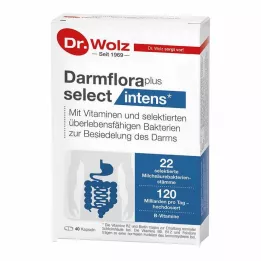
Darmflora plus select intens capsules, 80 pieces
DARMFLORA plus select intens Kapseln
$51.50 $57.38