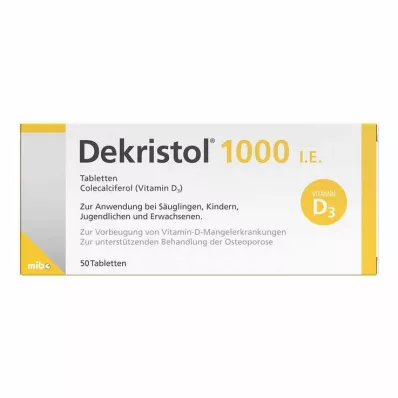


Dekristol 1,000 IU tablets, 50 pcs
DEKRISTOL 1.000 I.E. Tabletten
Manufacturers: MIBE GmbH Arzneimittel
PZN: 10068944
Dosage: Tabletten
Content: 50 St
Reward Points: 32
Availability: In stock
$6.45
$4.70
from German pharmacies to your address
Instructions for use for Dekristol 1,000 IU tablets, 50 pcs
Dekristol® D3 - The sunshine vitamin for every day
An outdoor workplace, daily sport or exercise - well before sunset, of course!Anyone who can say this for themselves not only has well-trained muscles and stable bones.The vitamin D supply is certainly good too.For many, however, everyday life looks different.Many people prefer to spend not only their working hours but also their free time indoors, both in summer and winter.One of the possible consequences is reflected in a study by the Robert Koch Institute: around six out of ten German adults had vitamin D blood levels that were too low.In children aged 1-17 years, almost half of the values were found to be too low.
The body only gets a small portion of its vitamin D from its diet.It is found, for example, in fatty fish such as mackerel, salmon or herring, and also a little in eggs, milk and cheese.Fruits and vegetables are healthy, but they do not contain vitamin D.The body produces most of it itself.However, our body needs the UV-B portion of sunlight for this.However, this is exactly what many people don't get enough of: in autumn and winter because hours of sunshine are scarce - but also in summer, when many activities take place indoors and/or because clothing and sunscreen outside protect the skin from the influence of UV-B radiation.
Skin type and age also influence vitamin D production: people with darker skin types and older people need more time in the sun to produce sufficient amounts of vitamin D.Others find it difficult to leave their apartment for health reasons.These people also have an increased risk of vitamin D deficiency.And certain medicines used regularly can also increase the need for vitamin D.According to the Federal Institute for Risk Assessment (BfR), the first signs of a vitamin D deficiency include low calcium and phosphate concentrations in the blood.Later, insufficient skeletal mineralization, bone pain, severe bone deformities and changes in muscle metabolism and respiratory functions as well as reduced immune function may occur.Vitamin D receptors - these are binding sites through which vitamin D mediates its effects - are also found in numerous cells in the organism.Therefore, involvement in processes such as the cardiovascular system and glucose metabolism is also discussed.
The German Nutrition Society recommends that adults take 800 IU of vitamin D daily. A sufficiently high dose of medicine such as Dekristol® can help prevent a deficiency and cover daily requirements.Dekristol® tablets are approved both for supportive treatment for patients with osteoporosis and for prevention of known risk of vitamin D deficiency in otherwise healthy people without disturbing the absorption of vitamin D in the intestine, as well as for prevention of osteomalacia and rickets in children, adolescents and adults.Dekristol® tablets are available in doses of 400, 500 and 1000 IU vitamin D.Further advantages of Dekristol®: As a contemporary medicine, Dekristol® tablets are also free of gelatin, making them a suitable choice for vegetarians who consume dairy products.Dekristol® is “Made in Germany”.
Active ingredients / ingredients / ingredients
Ingredients of Dekristol 1,000 IU tablets: Active ingredient: colecalciferol.One tablet contains 10 mg colecalciferol dry concentrate (corresponding to 25 µg colecalciferol = 1000 IU vitamin D3).Other ingredients: Lactose-1-water 68.94 mg;cellulose, microcrystalline;corn starch;corn starch, modified;carboxymethyl starch, sodium type A;sucrose 1.73 mg;silicon dioxide, highly disperse;magnesium stearate;sodium ascorbate;triglycerides, medium chain;DL-[alpha]-tocopherol.
Area of application
Dekristol 1,000 IU tablets contains vitamin D, which is involved in bone formation.The active ingredient colecalciferol is identical to the colecalciferol found in the human organism.The preparation is used to prevent rickets, to prevent an apparent risk of vitamin D deficiency in otherwise healthy people without absorption disorders, to support the treatment of osteoporosis and to prevent rickets in premature babies.No prescription is required for this product.
Dosage
Recommended use of Dekristol 1,000 IU tablets: Take the tablets with enough water.Use in infants and small children: Dissolve the tablet on a teaspoon with water or milk and give the dissolved tablet directly into the child's mouth, preferably during a meal. Adding the tablets to a bottle or porridge meal for infants is not recommended, as complete vitamin D intake cannot be guaranteed.If the tablets are to be administered with food, they should only be added after the food has been boiled and then cooled.When using vitaminized food, the amount of vitamin D it contains must be taken into account.
To prevent rickets and osteomalacia in children, adolescents and adults: 1/2 tablet daily (corresponding to 0.0125 mg or 500 IU of vitamin D3).For supportive treatment of osteoporosis in adults: 1 tablet daily (equivalent to 0.025 mg or 1000 IU of vitamin D3).To prevent rickets in premature babies: The dosage for preventing rickets in premature babies must be determined by the treating doctor.To prevent vitamin D deficiency in children and adults with a recognizable risk: Children, adolescents and adults take ½ - 1 tablet of Dekristol 1,000 IU tablets daily (corresponding to 0.0125 - 0.025 mg or 500 - 1000 IU vitamin D3).Infants (0 - 12 months) take the dosage as directed by the doctor.
Intake
Take the tablets with enough water.Use in infants and small children: Dissolve the tablet on a teaspoon with water or milk and give the dissolved tablet directly into the child's mouth, preferably during a meal.The disintegration of the tablet takes 1 - 2 minutes.The disintegration can be accelerated by gently moving the teaspoon.Adding the tablets to a bottle or porridge meal for infants is not recommended, as complete vitamin D intake cannot be guaranteed.If the tablets are to be administered with food, they should only be added after the food has been boiled and then cooled.When using vitaminized food, the amount of vitamin D it contains must be taken into account.
Contraindications
Dekristol 1,000 IU tablets must not be taken if you are hypersensitive (allergic) to colecalciferol or any of the other ingredients of the preparation, if you have hypercalcemia and/or hypercalciuria, if you have been diagnosed with hypervitaminosis D or if you have kidney stones.
Patient information
Please talk to your doctor or contact your pharmacy before taking the medicine.Particular caution is required when taking it if you are prone to the formation of calcium-containing kidney stones, if you have impaired excretion of calcium and phosphate via the kidneys, if you are being treated with medicines to promote urine excretion, if your ability to move is severely restricted, if you suffer from sarcoidosis, as there is a risk of increased conversion of vitamin D into its active form, or if your parathyroid hormone balance is disturbed.If your kidney function is impaired and you are being treated with the product, your doctor should monitor the effect of the treatment on calcium and phosphate balance.If other medicines containing vitamin D are prescribed, the dose of vitamin D in the preparation must be taken into account.Additional administration of vitamin D or calcium should only be given under medical supervision.In such cases, blood and urine calcium levels must be monitored.The medicine should be used with particular caution in infants and young children as they may not be able to swallow the tablets.It is recommended to dissolve the tablets as directed or use drops instead.During long-term treatment with 1000 IU daily, blood and urine calcium levels should be monitored and renal function should be checked by measuring serum creatinine.This monitoring is particularly important in elderly patients and during concurrent treatment with cardiac glycosides or diuretics.In case of hypercalcemia or signs of reduced renal function, the dose must be reduced or treatment interrupted.It is recommended to reduce the dose or interrupt treatment if the calcium content in the urine exceeds 7.5 mmol/24 hours (300 mg/24 hours).There is no evidence that the medicine affects the ability to drive or use machines.
Pregnancy
If you are pregnant or breast-feeding, think you may be pregnant or are planning to have a baby, ask your doctor or pharmacist for advice before taking this medicine.Daily doses up to 500 I. U./day: So far, no risks are known in the specified dose range.Long-term overdoses of vitamin D must be prevented during pregnancy, as the resulting hypercalcemia can lead to physical and mental disability as well as congenital heart and eye diseases in the child.Daily doses over 500 IU/day: During pregnancy, the preparation should only be taken according to strict indications and only in the dosage that is absolutely necessary to eliminate the vitamin D deficiency.Overdoses of vitamin D during pregnancy must be prevented, as long-term hypercalcemia can lead to physical and mental disability as well as congenital heart and eye diseases in the child.Women are allowed to breastfeed during treatment.Vitamin D and its metabolites are excreted in breast milk; this should be taken into account when administering additional vitamin D to infants.
Notes
Contains lactose and sucrose.Please do not use this medicine after the expiry date stated on the pack or outer packaging.The expiry date refers to the last day of the specified month.
Images of Dekristol 1,000 IU tablets, 50 pcs


Medicines Reviews
Write a review
Related Products

Popular in Stomach, intestines & Digestion
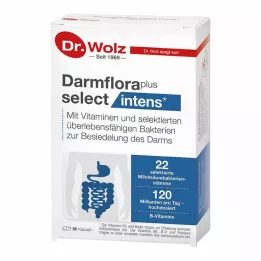
Darmflora plus select intens capsules, 80 pieces
DARMFLORA plus select intens Kapseln
$51.50 $57.38