

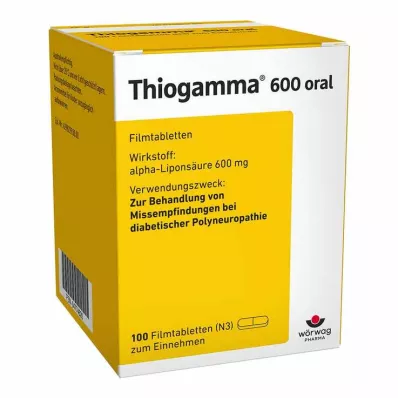


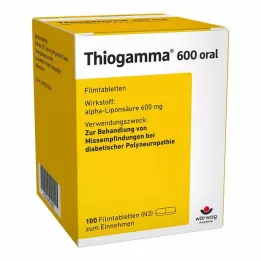
Thiogamma 600 oral film-coated tablets, 100 pieces
THIOGAMMA 600 oral Filmtabletten
Manufacturers: Wörwag Pharma GmbH & Co. KG
PZN: 04774626
Dosage: Filmtabletten
Content: 100 St
Reward Points: 934
Availability: Out of stock
$122.10
$121.40
from German pharmacies to your address
Instructions for use for Thiogamma 600 oral film-coated tablets, 100 pieces
Thiogamma® 600 oral: Effective in diabetic polyneuropathy
About one in three patients with diabetes suffers from diabetic polyneuropathy.Typical symptoms such as tingling, numbness, burning or pain in the feet and hands can occur.The main cause of this nerve damage is thought to be oxidative stress, which is caused by the altered metabolism caused by diabetes.
Thiogamma® 600 orally with the antioxidant alpha lipoic acid offers an advantageous therapy option by helping the body to reduce oxidative stress.In this way, it counteracts the discomfort that many people with diabetic nerve damage suffer from and can thus improve the quality of life of those affected.
Patients have been relying on the proven German medicinal quality of Thiogamma® 600 oral for over 25 years.According to a study, when taking the recommended daily dose of 600 mg of alpha lipoic acid, symptoms such as numbness, burning, tingling and pain can be significantly reduced after just 5 weeks.
Due to its good tolerability, oral alpha lipoic acid is suitable for long-term treatment.
Thiogamma® 600 orally with antioxidant alpha lipoic acid:
Relieves discomfort in diabetic polyneuropathy
Well tolerated and suitable for long-term treatment
Only 1 tablet daily
Made in Germany
No prescription is required for this product
Treat the cause and symptoms of diabetic polyneuropathy with alpha lipoic acid
Alpha lipoic acid combats a cause of diabetic polyneuropathy by scavenging free radicals and thereby reducing increased oxidative stress.This powerful antioxidant has proven itself in relieving unpleasant symptoms of diabetic polyneuropathy such as tingling, burning and pain.
The special thing about alpha lipoic acid: It not only has an antioxidant effect itself, but also regenerates other important antioxidants for the body such as vitamins C and E.
Daily self-control
In addition to regular check-ups with the doctor, you should also thoroughly inspect your feet yourself every day.Are there any changes to your nails or skin?Do you notice pressure points, cracks or cracks?A small hand mirror can be useful for a closer examination or you can ask relatives for help.You should report any abnormalities to your doctor.
Regular footbath - but properly
A foot bath should be done regularly - a maximum of 3 times a week - and no longer than about 3 minutes.Lukewarm water (30 to 37 °C) is optimal.Be sure to check the water temperature with a thermometer!Alcoholic bath additives or soaps should be avoided.After the bath, dry your feet and between the toes thoroughly with a soft towel or blow dry.
Nail scissors are taboo
You should avoid using scissors, nail clippers or sharp nail files when caring for your feet due to the risk of injury.This also applies to the use of corn plasters or caustic tinctures.A rounded file made of sandpaper is recommended for shortening the nails.
Never walk barefoot
When you walk barefoot, you risk getting splinters, stubbing your toes, or injuring yourself in other ways.In summer there is also the risk of burning your feet from exposure to the sun or hot sand.
Keep your eyes open when buying shoes
To prevent pressure points or blisters caused by shoes that are too tight, you should check whether the shoe is wide enough by removing the insole.Also feel the shoes from the inside to make sure there are no annoying seams or bumps.High heels are not recommended.It's best to buy new shoes in the early afternoon and break them in well.This can help to avoid incorrect loading.
Frequently asked questions and answers
What is diabetic polyneuropathy?
This is the most common form of diabetic neuropathy.“Neuropathy” is the general medical term for diseases of the nerves, “poly” means that several nerves are affected at the same time.
Specifically, the increased blood sugar primarily damages the particularly sensitive long nerve fibers that extend into the feet and toes.The problems usually first appear on the tips of the toes of both feet and then spread to the lower legs and hands.The nerve damage can cause incorrect signals to be sent and become noticeable to the patient as abnormal sensations (e.g. tingling).
Why are nerves damaged in diabetes?
Constantly elevated blood sugar levels lead to nerve-damaging processes being set in motion:
Oxidative stress
Inflammatory reactions
Circulatory disorders
Oxidative stress in particular puts a lot of strain on the nerves.It occurs because in diabetes more so-called free radicals - aggressive oxygen molecules that attack the body's own structures (e.g. nerve cells) - are formed than can be intercepted by antioxidants.Antioxidants are substances that render these radicals harmless and thus protect the body against them.They are therefore also called “radical catchers”.
What is Alpha Lipoic Acid?
Alpha lipoic acid is a natural fatty acid.The human body can produce some of them itself or absorb them through food.There is a particularly high amount of alpha lipoic acid in broccoli, offal (kidneys, heart, liver), spinach and tomatoes.Alpha lipoic acid takes on some important tasks in the body: It is a strong antioxidant, protects cells from free radicals and thus reduces oxidative stress in the body.It is also involved in numerous metabolic reactions.
A special advantage: Alpha lipoic acid is both water and fat soluble.This means it can work in a wide variety of areas of the body and counteract diabetes-related nerve damage and the discomfort it causes.The well-researched active ingredient has been used for more than 25 years to combat the sensations associated with diabetic polyneuropathy.
Active ingredients / ingredients / ingredients
600 mg DL-alpha-lipoic acid
Cellulose, microcrystalline excipient
Croscarmellose, sodium salt excipient
Dimeticon excipient
Hypromellose excipient
0.0041 BE Carbohydrates excipient
Lactose 1-water excipient
Macrogol 6000 excipient
Magnesium stearate excipient
Sodium dodecyl sulfate excipient
Silicon dioxide, highly disperse auxiliary substance
Talc excipient
Contraindications
The medicine should not be taken if you are allergic to thioctic acid or any of the other ingredients.
Dosage
To achieve optimal effectiveness, Thiogamma® 600 should be taken orally as follows: 1 tablet daily, unchewed and with sufficient liquid, e.g.B. a glass of water.It should be taken on an empty stomach, approx. 30 minutes before the first meal.Do not take Thiogamma® 600 orally together with medications that contain metal (e.g. magnesium or iron).When consuming dairy products, it is important to ensure that they are taken at different times because of their calcium content.
Intake
The film-coated tablets should be taken without chewing and with sufficient liquid on an empty stomach.Concomitant consumption of food may hinder the transfer of thioctic acid into the bloodstream.It is therefore important, particularly in patients who also have a prolonged gastric emptying time, that it is taken half an hour before a meal/breakfast.
Patient information
Please talk to your doctor, pharmacist or nurse before taking the medicine.
Children and adolescents should be excluded from treatment as there is no clinical experience for this age group.
No special precautions are required.
Pregnancy
If you are pregnant or breast-feeding, think you may be pregnant or are planning to have a baby, ask your doctor or pharmacist for advice before taking this medicine.
It is in accordance with the general principles of pharmacotherapy to use drugs during pregnancy and breastfeeding only after careful risk-benefit assessment.
Pregnant and breastfeeding women should only undergo treatment with alpha-lipoic acid after careful recommendation and monitoring by a doctor, as there is currently no experience with this patient group.Special studies on animals have shown no evidence of fertility disorders or teratogenic effects.
Nothing is known about the possible excretion of alpha-lipoic acid into breast milk.
Notes
Thiogamma® 600 orally.Active ingredient: Alpha lipoic acid 600 mg.Areas of application: abnormal sensations in diabetic polyneuropathy.For information about risks and side effects, read the package leaflet and ask your doctor or pharmacy.Wörwag Pharma GmbH & Co. KG, 71034 Böblingen
Other
The basis of the treatment is the optimal diabetes control.
Taking the tablet while eating can hinder the absorption of the active ingredient.
Regular consumption of alcohol is a significant risk factor for the development and progression of nerve disorders and can therefore also affect the success of treatment with the drug.Therefore, if you have nerve disease caused by diabetes (diabetic polyneuropathy), it is generally recommended to avoid drinking alcohol as much as possible.This also applies to treatment-free sections.
The active ingredient is a metal chelator and should therefore not be given at the same time as metal compounds (e.g. iron preparations, magnesium preparations, dairy products due to their calcium content).
By taking the entire daily dose 30 minutes before breakfast, iron and magnesium supplements can be taken at lunch or in the evening.
Images of Thiogamma 600 oral film-coated tablets, 100 pieces


Medicines Reviews
Write a review
Popular in Discomfort



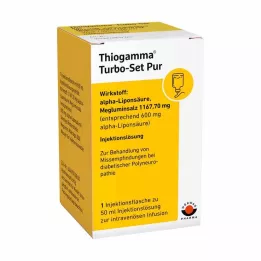
Thiogamma Turbo Set Pur injection bottles, 50 ml
THIOGAMMA Turbo Set Pur Injektionsflaschen
$14.27 $17.82
Thiogamma 600 oral film-coated tablets, 100 pieces
THIOGAMMA 600 oral Filmtabletten
$121.40 $122.10
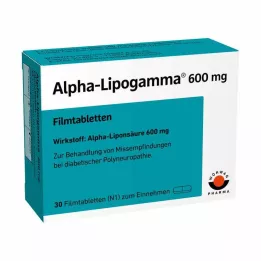
Alpha Lipogamma 600 mg film-coated tablets, 30 pcs
ALPHA-LIPOGAMMA 600 mg Filmtabletten
$32.36 $37.87