
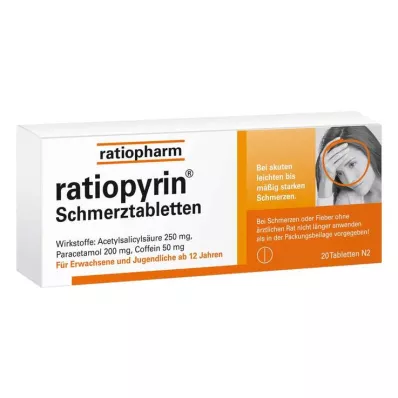
ratiopyrin® pain tablets, 20 pcs
RATIOPYRIN Schmerztabletten
Manufacturers: ratiopharm GmbH
PZN: 07686182
Dosage: Tabletten
Content: 20 St
Reward Points: 51
Availability: Out of stock
$8.21
$6.98
from German pharmacies to your address
Instructions for use for ratiopyrin® pain tablets, 20 pcs
ratiopyrin® painkillers
ratiopyrin® pain tablets is a pain-relieving, fever-reducing and anti-inflammatory medicine.It contains a combination of acetylsalicylic acid, paracetamol and caffeine.This medicine is a non-steroidal anti-inflammatory and analgesic.It is used in adults and adolescents aged 12 and over for acute, mild to moderate pain.No prescription is required for this product.
Area of application
The medicine is used to relieve acute, mild to moderate pain in adults and adolescents aged 12 and over.It has an analgesic, antipyretic and anti-inflammatory effect.
Active ingredients / ingredients / ingredients
Each tablet contains 250 mg acetylsalicylic acid, 200 mg paracetamol and 50 mg caffeine.The following additives are also included: lactose 1 water, lactose, corn starch, stearic acid and talc.
Contraindications
The medicine must not be taken if you are allergic to salicylates, paracetamol, caffeine or any of the other ingredients.The drug should also not be used if you are hypersensitive to other non-steroidal anti-inflammatory drugs.Its use is also contraindicated in the case of stomach and intestinal ulcers, liver and kidney failure, severe heart muscle weakness, a pathologically increased tendency to bleeding, and simultaneous intake of 15 mg or more methotrexate per week.The medicine must not be used in the last three months of pregnancy or in children under 12 years of age.Teenagers aged 12 and over with chickenpox or flu-like illnesses should also not take the medication because of the risk of Reye's syndrome.In the event of a rare congenital intolerance to any of the excipients, the drug should not be used.Excessive caffeine intake should be avoided while taking it.
Dosage
Always take the medicine exactly as described in the package leaflet or as directed by your doctor or pharmacist.Unless otherwise prescribed by the doctor, the usual dose for adults and adolescents aged 12 and over is a single dose of 1 to 2 tablets.The maximum dose per day should not exceed 6 tablets.The time interval between taking the next tablet should be 4 to 8 hours.The painkillers should not be used for longer than 3 to 4 days or in higher doses without medical or dental advice.A variety of symptoms may occur with an overdose, including nausea, vomiting, abdominal pain, dizziness, ringing in the ears, and liver damage.If you suspect an overdose, you should contact a doctor immediately and stop taking any further medication.If you forget to take a dose, do not take a double dose.
Intake
The tablets can either be dissolved in a little liquid or taken whole with plenty of liquid.Taking it after meals may result in a delayed onset of action.
Patient information
Please talk to your doctor or pharmacist before taking the painkillers if you are taking simultaneous therapy with anticoagulants, thrombolytics or certain antidepressants.Consultation should also be made if you have bronchial asthma, hay fever, swelling of the nasal mucosa, chronic stomach or intestinal problems, kidney dysfunction, liver dysfunction, glucose-6-phosphate dehydrogenase deficiency, Gilbert's syndrome, before operations or if you have an overactive thyroid.An overdose can lead to liver damage.Headaches can occur if painkillers are used in high doses for a long time and not as intended.The painkillers can mask the signs of infection.At the first signs of a hypersensitivity reaction after ingestion, therapy must be discontinued.In low doses, acetylsalicylic acid reduces uric acid excretion.Older patients are more likely to experience side effects after using non-steroidal anti-inflammatory drugs, particularly bleeding in the stomach and intestines.Patients, particularly those of older age, who have a history of gastrointestinal side effects should report any unusual abdominal symptom, particularly at the beginning of therapy.Treatment should be discontinued if bleeding or ulceration of the gastrointestinal tract occurs.If black stools (tarry stools) occur, you should contact your doctor immediately.
Ability to drive and use machines
There are no known effects on the ability to drive or use machines as a result of taking it. If you experience side effects such as drowsiness, blurred vision, dizziness or balance problems, you should not drive or use machines.
Pregnancy
If you are pregnant or breast-feeding, think you may be pregnant or are planning to have a baby, ask your doctor or pharmacist for advice before taking this medicine.The painkillers should not be taken during pregnancy as the pregnancy and/or the development of the unborn child may be affected.Painkillers must not be used in the last three months of pregnancy or during childbirth.The active ingredients pass into breast milk.With short-term use of the recommended dose, interruption of breast-feeding will usually not be necessary.If you use it for a long time or take higher doses, you should stop breastfeeding.Acetylsalicylic acid belongs to a group of medicines that can affect female fertility.This effect is reversible after discontinuation of the drug.
Notes
For information about risks and side effects, read the package leaflet and ask your doctor or pharmacy.If you have pain or fever, do not use it for longer than stated in the package leaflet without medical advice!
Other
Taking painkillers habitually is dangerous.It can lead to irreparable damage to health.In general, long-term use of painkillers, especially when several painkilling agents are combined, can lead to permanent kidney damage with the risk of kidney failure (analgesic nephropathy).Long-term use of the active ingredient combination can lead to an increased risk of kidney damage caused by painkillers if there is pre-existing kidney damage or a genetic predisposition.Long-term, high-dose, improper use of painkillers can cause headaches as well as fatigue, muscle pain, nervousness and vegetative symptoms.This will subside within a few days.Until then, you should not take painkillers again and should not take them again without medical advice.If taken before surgical procedures, the doctor/dentist should be consulted or informed.If black stools (tarry stools) occur, you should contact your doctor immediately.If the recommended dosage is exceeded, liver values (transaminases) may increase.Therefore, regular monitoring of transaminases is necessary, especially in children.
Medicines Reviews
Write a review
Related Products

IBU-LYSIN DoppelherzPharma 400 mg film-coated tablets, 50 pcs
IBU-LYSIN DoppelherzPharma 400 mg Filmtabletten
$14.44 $23.17
Popular in Headache


Ibuprofen HEUMANN painkillers 400 mg, 50 pcs
IBUPROFEN Heumann Schmerztabletten 400 mg
$4.91 $14.56

Neuralgin extra Ibu-Lysinate film-coated tablets, 20 pcs
NEURALGIN extra Ibu-Lysinat Filmtabletten
$8.89 $13.51

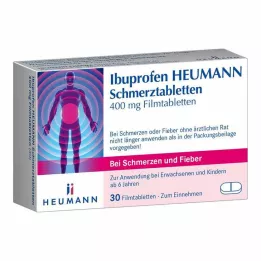
Ibuprofen HEUMANN painkillers 400 mg, 30 pcs
IBUPROFEN Heumann Schmerztabletten 400 mg
$5.76 $8.95
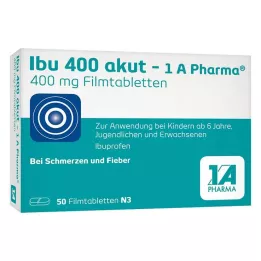
Ibu 400 acute – 1 A Pharma® film-coated tablets, 50 pcs
IBU 400 akut-1A Pharma Filmtabletten
$5.65 $12.82